Showing posts with label special effects. Show all posts

Sunday, May 1, 2016

IRON MAN 2: Empty Shellhead

In the weeks leading up to Marvel's next blockbuster juggernaut, Captain America: Civil War, we will be looking at every cinematic iteration of those two warring rapscallions, Captain America and Iron Man.

Other Reviews in this Series.


Director: Jon Favreau
Writer: Justin Theroux
Cast: Robert Downey Jr., Gwyneth Paltrow, Don Cheadle, Mickey Rourke, Sam Rockwell, Scarlett Johansson, Samuel L. Jackson, Clark Gregg, John Slattery, Gary Shandling, Paul Bettany
Runtime: 124 mins.
2010

Iron Man made a splash in the cultural landscape by being tight, fun, propulsive, and sleek. Iron Man 2 has the distinction of sharing none of those qualities. Instead it is nasty, morose, choppy, and kind of pointless. The sheer watchability of the cast is perhaps the one thing that prevents Iron Man 2 from being a total chore.

This film more than any other showcases the growing pains of Hollywood's first cinematic universe. With only Iron Man and the decent The Incredible Hulk under their belt, Marvel set out to capitalize on the promise of the famous Nick Fury post-credit coda. Unsurprisingly this meant cranking out a sequel to their 2008 smash hit with the same filmmaker at the helm. But this also meant rushing into the production and shoehorning in a cavalcade of shared universe elements that cripple any coherent narrative that may have existed otherwise.

Friday, April 29, 2016

THE JUNGLE BOOK: Bearly Coherent


Director: Jon Favreau
Writer: Justin Marks
Cast: Neel Sethi, Ben Kingsley, Bill Murray, Idris Elba, Lupita Nyong'o, Christopher Walken, Giancarlo Esposito, Scarlett Johansson
Runtime: 106 mins.
2016

The Jungle Book amounts to a mediocre but entertaining film. It's so entertaining, in fact, that it successfully distracts its audience from its own flaccid plot. The film exists first and foremost as a piece of spectacle, and within that realm it accomplishes exactly what it set out to do. What you've probably heard concerning the visuals is true; they move beyond impressive and into immersive. From the very first moment it's as if you've stumbled into the jungle and are hanging out right alongside Mowgli (Neel Sethi). Not for a moment did the seams show enough to divorce me from Favreau's lush jungle environment, which is shocking when you learn that the entirety of the movie was filmed in an LA soundstage. This is so vividly a living, breathing world. Spending a couple of hours there is a blast.

The impulse to focus on the setting produces some iconic work, but the screenplay is barely enough to prop it up. The result is a tonal mishmash that is trying so hard to please everybody that it fails to achieve a distinct identity of its own. I counted three warring movies existing within Favreau's Jungle Book, any one of which would have been excellent on its own. Three movies that sapped strength from each other, and interrupted each other at inopportune moments. Here is my window into The Jungle Books that could have been.

Saturday, October 31, 2015

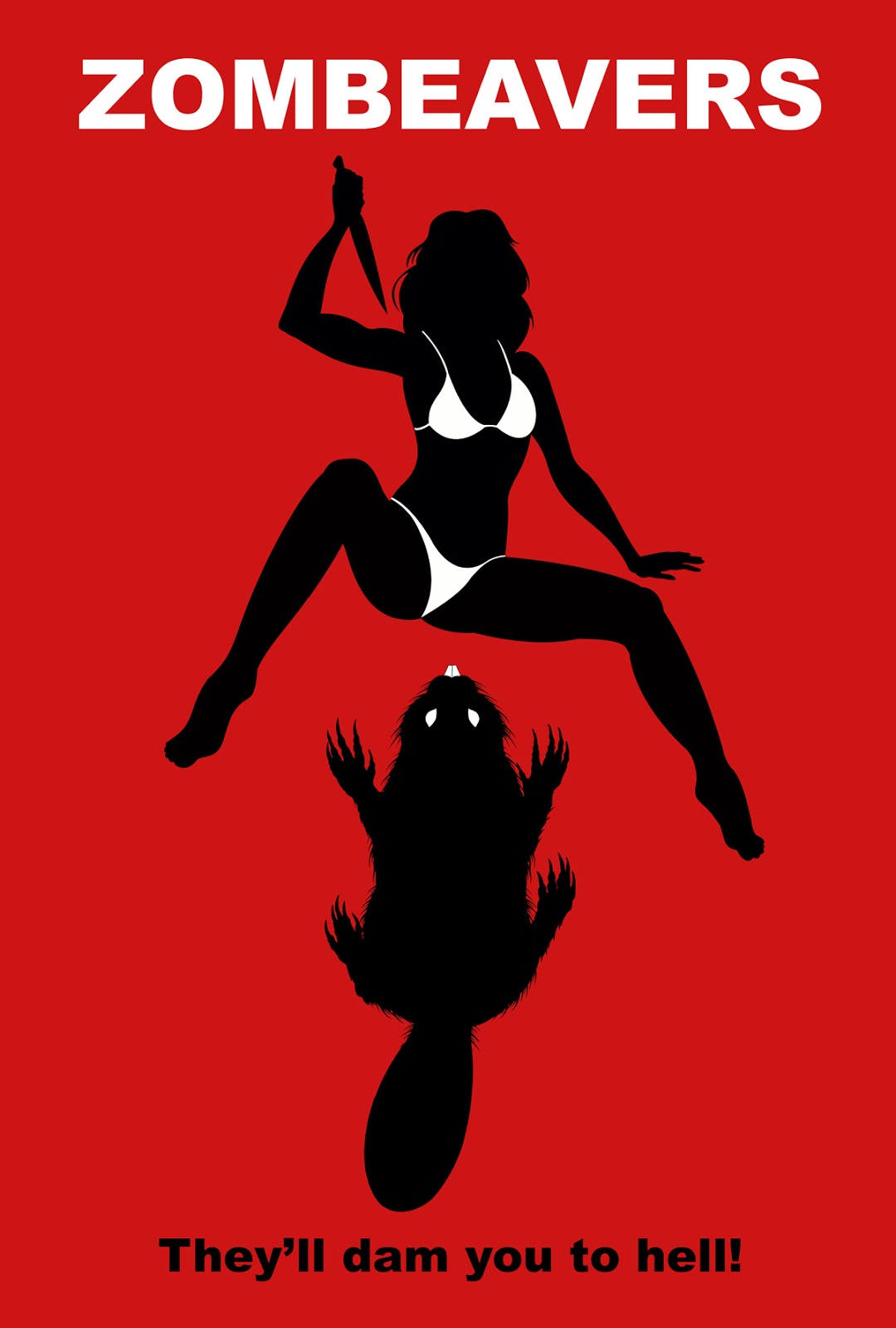
ZOMBEAVERS: Bucking Trends


Director: Jordan Rubin
Writers: Jordan Rubin, Al Kaplan, Jon Kaplan
Cast: Rachel Melvin, Courtney Palm, Lexi Atkins, Hutch Dano, Jake Weary, Peter Gilroy
Runtime: 85 mins.
2014

Watching bad horror requires mental gymnastics no lesser than those required for art house films. Part of that has to do with the violent reductionism that comes with the term "bad horror." It can mean all sorts of things: The Troll 2 idiosyncratic acid dream kind of bad. The House at the End of the Street dull slog kind of bad. The Cabin in the Woods only pretending at being bad. The Rubber self-consciousness that elevates the filmmaker above the audience kind of bad. Then there's something like James Gunn's directorial debut, Slither, which has much more in common with Zombeavers than the rest. This list of movies shares little beyond the designation of "horror," each featuring distinctive tones, themes, goals, and levels of irony. "Bad horror" lumps together movies that have scant business being in the same conversation, and it can lead to two people talking past each other. "Oh yeah, I heard that movie was awful," could be said with a disdainful scoff, or with barely contained glee--and it could be received in many more diverse ways.

It all comes down to meeting a movie on its own terms. Zombeavers first splashed into the public's consciousness with a trailer that went viral and shot up to 1,000,000+ views in a week's time. In the wake of this surprise publicity, folks all across the internet were heralding the movie as the next Sharknado. Now, I like Sharknado. It's fun, but the pervasive this-is-soooo-awful-let's-all-laugh-at-how-awful-this-is attitude can get grating after a while. The sly winking is palpable. I'm an advocate of self-awareness, but there's something disingenuous about setting out to make a bad movie. It can seem like the creators just want a backdoor excuse to wave away any problems the final product might have. Merely advertising It's Supposed to Be Bad! does not forgive all ills.

Sunday, October 11, 2015

A BUG'S LIFE: Ant-i-climactic

Twenty years ago Pixar Animation Studios revolutionized cinema with the first full length completely computer-generated film. Two decades later and Pixar is still one of the most consistently groundbreaking studios in the business. Leading up to the release of their new film The Good Dinosaur, I will be going through Pixar's entire filmography at the rate of two movies a week. Here we tackle A Bug's Life and wrestle it to the ground and ask it why it isn't better and then apologize for being harsh.

Other Reviews in this Series.

(If you haven't already, check out my new archive in the corner ---->)


Directors: John Lasseter, Andrew Stanton (co-director)
Writers: Andrew Stanton, Don McEnery, Bob Shaw, John Lasseter, Joe Ranft, Geefwee Boedoe, Jason Katz, Jorgen Klubien, Robert Lence, David Reynolds
Cast: Dave Foley, Kevin Spacey, Julia Louis-Dreyfus, Hayden Panettiere, Phyllis Diller, Richard Kind, David Hyde Pierce, Joe Ranft, Denis Leary, Jonathan Harris, Madeline Kahn, Bonnie Hunt, Michael McShane, Brad Garrett, John Ratzenberger
Runtime: 95 mins.
1998

Three years after the release of their defining creation, Pixar released the film that would solidify the company's patterns: anthropomorphic creatures made sympathetic, extensive sight gags and character humor, a star-studded voice cast, state of the art visuals, a rogue's gallery of creative writers and directors shuffled into different roles from movie to movie... A studio's second movie allows it to either make a creative departure, or define itself, and Pixar chose the latter. A Bug's Life represents everything that Pixar is and has become, with one exception: it is standard.

I enjoyed A Bug's Life as a kid, and returning to it now is mildly disappointing. There's nothing wrong with the movie, and it all functions as it should, but that's really the problem. It functions as it should, not as it could. The whole movie feels sadly typical.

Tuesday, September 29, 2015

CLOSE ENCOUNTERS OF THE THIRD KIND: I Want to Believe

Every other day leading up to the release of his new movie Bridge of Spies, we will be dissecting a film in Steven Spielberg's oeuvre. I've picked ten movies spanning the length of Spielberg's career, five of which I have seen and five of which I haven't. Today's film is Close Encounters of the Third Kind, young Spielberg's alien encounter passion project.

Other Reviews in this Series: Duel, 1941Empire of the SunAmistadA.I. Artificial IntelligenceCatch Me If You CanWar of the WorldsMunichLincoln

Other Spielberg Reviews: JawsJurassic ParkThe Lost WorldBridge of Spies

(If you haven't already, check out my new archive in the corner ---->)


Director: Steven Spielberg
Writer: Steven Spielberg
Cast: Richard Dreyfuss, Melinda Dillon, Francois Truffaut, Teri Garr, Bob Balaban
Runtime: 137 mins.
1977

Close Encounters of the Third Kind is a movie about aliens visiting Earth and making their first (official) contact. The entire film unravels like the first act of an alien invasion movie blown up, drawn out, and made resonant in its own right.* We see the bizarre effects of the impending alien contact on all sorts of people, only a handful of which are main characters. The most central, most explored, and most interesting human is Roy Neary (Richard Dreyfuss), who encounters a UFO on a lonely road at night, and cannot stop thinking about it. His obsession morphs into something strange and uncontrollable, and he alienates his family in the process of trying to figure out what it is that pulls him so.

*I hesitate to make this comparison, but this movie operates much like M. Night Shyamalan's Unbreakable in the sense that that film is the first act of a superhero origin story blown up, drawn out, and thus fashioned into a spiritual journey. We forget, but once upon a time Shyamalan was heralded as the new Spielberg. A few years ago the new new Spielberg was supposed to be J. J. Abrams. I think it's a testament to Spielberg's singularity that we clearly have not yet found his heir to the blockbuster throne.


I've seen Close Encounters of the Third Kind twice now, and I still have no idea exactly how I should think about it. Part of that must be that the film thematically denies this brand of dissection, imploring us, "Don't think about it: just go." It's a film about a religious conversion, among other things.

Part of it might be that this is the truest, most essential Spielberg film. That's a bit of a paradox, as so much of Close Encounters is antithetical to the sort of blockbuster that Spielberg invented. There's no strong, clear narrative arc. The protagonist isn't easily sympathetic--in fact he's kind of despicable. There aren't any explosions or fights. There isn't much of any conflict whatsoever. Nor is it akin to Spielberg's later dramatic fare, with large sweeping narratives and big historical personalities. This film is an unfocused story of everymen and nobodies. Despite all that, the one major constant of all of Spielberg's filmography, a trend that Close Encounters doubles down on, is a profound sense of awestruck wonder. That most Spielbergian of cinematic tricks is purest in Close Encounters, which is not coincidentally the only movie in all of Spielberg's career that he both wrote and directed.* Spielberg is the anti-Nolan for this reason: Nolan demands you apply your intellect to his puzzle box narratives, and rewards you for doing so. Spielberg doesn't care about any of that; if anything, Spielberg demands that you abandon your sense of logic and go along for the ride. Wonder by its nature defies the critical gaze, so maybe that's where I hit the roadblock.

*Poltergeist controversy notwithstanding. (The rumor is that in addition to writing the film, Spielberg ghost directed it.)

Or maybe it's just that Close Encounters is the sort of movie that demands to be revisited every five years or so, and is different every time. I read an article about the film recently, and the comment section was radically split between people who loved the ending (spoiler alert I guess?), whereas a large contingent found it unbelievable and/or morally reprehensible that Roy Neary decides to leave his earthly family behind and go off spacetrotting with the extraterrestrials. Personally, I love the choice. I think it's a perfect button on a movie about the inexplicable pull of the unknown. But then again, I'm a young whippersnapper who doesn't have a family of my own. Spielberg himself has admitted that, after having children, he feels like he screwed up that ending. Either way, I'm glad we got the movie we got. The ending of Close Encounters spits in the face of typical mainstream movie catharsis, and that's a big part of why it's so damned interesting.


Close Encounters is Spielberg's first movie after the massive breakthrough hit of Jaws, and it feels like he still has something to prove. The main character's arc could be read as a religious narrative of course, but it could just as soon be read as the story of the intense and uncanny pull that cinema exercised over young Spielberg's mind. That being said, the whole film sort of washes over you, like a bath in a baptismal font. Maybe it's the lack of conflict, or the deliberate pacing, but all of Close Encounters feels very much like a dream: I only recently watched it, yet I'm having a hard time remembering everything that happened, instead returning again and again to the key moments that have been emblazoned upon my memory. The abduction of the child. The inspired destruction of the suburban home. The musical conversation with the alien mothership. These strong images remain when everything else floats away.

I don't care so much about any of the other characters, but I can't stop thinking about Roy Neary's arc. This certainly means that Dreyfuss did an excellent job. His performance is engaging without being ingratiating, and subtle without being workmanlike. He's not lovable. He's not a piece of crap. He's just a person who feels the need to build a mashed potato mountain.

Special credit goes to the visual effects and, in particular, the lighting design. Apparently Spielberg did a lot of the effects concepts himself, another indicator that this was his labor of love. The visuals fit perfectly with the tone of the movie, and sometimes may look a bit shabby, but feel more real than 95% of effects driven movies. And the lighting is absolutely brilliant. The major thing I remembered from seeing Close Encounters years ago was the blaring orange light that shone through the door during the abduction scene, a scene that is a master class of building tension and the sole point in the movie where the aliens read as overtly sinister. Throughout the movie, the interplay of unnatural light and sound (or lack thereof) works beautifully to establish the uncanny without forcing tension.


It feels weird to rate Close Encounters. It's not one of my favorites, but I think it might be a masterpiece, and I appreciate the hell out of it. It's just one of those films that unveils the ultimate bankruptcy of a numeric rating scale for works of art.

4 / 5  BLOBS

Friday, September 4, 2015

TEENAGE MUTANT NINJA TURTLES: Viewers in a Half-Hell


Director: Jonathan Liebesman
Writers: Josh Appelbaum, Andre Nemec, Evan Daugherty
Cast: Megan Fox, Will Arnett, William Fichtner, Tohoru Masamune, Whoopi Goldberg, Johnny Knoxville, Tony Shalhoub, Alan Ritchson, Noel Fisher, Jeremy Howard, Pete Ploszek, Danny Woodburn
Runtime: 101 mins.
2014

In response to [Michael Bay's announcement about creative changes in the film], actor Robbie Rist, who voiced Michelangelo in the first three films, wrote to Bay accusing him of "sodomizing" the franchise. Rist later remarked that he could have been out of line since Bay makes more money than he does.
-Wikipedia

Somewhere, in the darkest stickiest corridors of adolescence, a full-time Minecraft player and habitual masturbator has mustered up the list of his (because it is inevitably a he) ten favorite movies--Transformers: Age of Extinction, The Amazing Spider-Man, The Dark Knight, etc.--and from these has logically (because everything must be logical) determined the formula for the most perfect Ninja Turtles movie imaginable, for that is the intellectual property nearest and dearest to his heart, and he feels as if the special effects in the trilogy of extant Turtles films are not realistic enough (because the greatest value an action film can have is realism). From this hypothetical basement-dwelling woman-hating travesty of a subconsciousness, Jonathan Liebesman's Teenage Mutant Ninja Turtles is born.

One more gem from Wikipedia before we get into this:

In mid-February 2013, actress Megan Fox was reported to be cast as April O'Neil, marking her first collaboration with Bay since her remark comparing him to Adolf Hitler.

Sunday, June 14, 2015

JURASSIC WORLD: Incoherentus Rex


Director: Colin Trevorrow
Writers: Rick Jaffa, Amanda Silver, Colin Trevorrow, Derek Connolly
Cast: Chris Pratt, Bryce Dallas Howard, Vincent D'Onofrio, Ty Simpkins, Nick Robinson, Irrfan Khan, BD Wong
Runtime: 124 mins.
2015

Other reviews in this series:

Jurassic Park
The Lost World
Jurassic Park III

This week I've been posting reviews of the Jurassic series and refining my theory that the unifying theme of the franchise is that each movie functions as a metacommentary on its own existence. Not only has this been a fun discovery, it has also pushed me towards a deeper (or at least more forgiving) perspective on the sequels.

Jurassic World continues the cursorily self-aware tradition of the previous films. In this sequel, appearing twenty-two years after the original and fourteen years after the last entry, the theme park is finally open. Claire (Bryce Dallas Howard) is running a tight ship. She's calculating, efficient, and has to deal with her two nephews for the weekend! She abandons them though.

Attendance numbers spike whenever the genetics team, led by Dr. Henry Wu (BD Wong), cook up a new attraction, so they've created the biggest baddie of them all, Indominus Rex. To nobody's surprise but the characters', the Indominus Rex escapes and begins wreaking dramatically pertinent havoc on the park. It's up to Owen (Chris Pratt) and his raptor buddies to save the day.

Thursday, June 11, 2015

THE LOST WORLD: Metasequelitis


Director: Steven Spielberg
Writer: David Koepp
Cast: Jeff Goldblum, Julianne Moore, Pete Postlethwaite, Arliss Howard, Vince Vaughn, Richard Schiff, Vanessa Lee Chester, Richard Attenborough
Runtime: 129 mins.
1997

Other reviews in this series:

Jurassic Park
Jurassic Park III
Jurassic World

It was as if Spielberg threw up his arms and yelled, "Alright, you want more dinosaurs? YOU'RE GETTING MORE GODDAMNED DINOSAURS."

I called Jurassic Park a metapromotional movie, and if that is the case, then The Lost World is certainly a self-reflexive sequel about sequels. The movie begins with John Hammond (an increasingly feeble Richard Attenborough) explaining to a cynical cranky Ian Malcolm (Jeff Goldblum) that Isla Nublar is not the only island with dinosaurs on it. There's another one called Isla Sorna, and the dinos there are flourishing in the wild. Having given up on his capitalist aspirations, Hammond simply wants Malcolm for a team intended to observe and document the animals in the wild: a team that includes photojournalist Nick Van Owen (Vince Vaughn), weapons expert Eddie Carr (Richard Schiff), and paleontologist Sarah Harding (Julianne Moore), who happens to be Malcolm's girlfriend... and also happens to be on the island already, without his knowledge. So he is strongarmed into returning to his worst nightmare.


Once the team arrives on the island, they find they are not alone. Nefarious corporation InGen has sent an enormous squad--led by big game hunter Roland Tembo (Pete Postlethwaite) and prissy businessman Peter Ludlow (Arliss Howard)--to pillage the island, capture dinosaurs, and transport them to San Diego. This plays out as an extended action sequence that involves many jeeps, many fancy guns, and many species of dinosaur being brutalized as our heroes watch through binoculars from an outcropping. The heroes function as an audience stand-in for the scene, watching the perverse spectacle play out in front of them with stricken looks on their faces. In this moment, Spielberg's metacommentary couldn't be clearer: You wanted a sequel because you loved the wonder and majesty of Jurassic Park, but the serialization of a self-contained story can only violate the wonder of the original. The spectacle is captured and caged by greedy capitalists, all for the benefit of a viewing audience.

Wednesday, June 10, 2015

JURASSIC PARK: A Paradigm Shift


Director: Steven Spielberg
Writers: Michael Crichton, David Koepp
Cast: Sam Neill, Laura Dern, Jeff Goldblum, Richard Attenborough, Samuel L. Jackson, Bob Peck, Martin Ferrero, Joseph Mazzello, Ariana Richards, Wayne Knight
Runtime: 127 mins.
1993

Other reviews in this series:

The Lost World
Jurassic Park III
Jurassic World

I must admit upfront, it would be impossible for me to craft anything close to an objective review of Jurassic Park. Released in 1993 (my birth year), this is on the short list of films that have been omnipresent in my life, having grown up with an older brother who worshiped Crichton and Spielberg both. I must have seen it dozens of times, and when a piece of art saturates your childhood, you can't help but sink into every piece of dialogue and camera shot as if it represents how the movie inevitably must be.

All that is to say, I love Jurassic Park with all my heart, but I have a poor idea of exactly how proficient the movie is. Part of that is me, but stepping back to take a look at the film's history makes one realize just how much of that has to do with Spielberg's artistry, both within and without of the film itself.